Every Minute Counts: Why India Must Act FAST Against the Silent Stroke Epidemic
Stroke is not a distant threat. It is a staggering global public health crisis that is unfolding in our homes and communities every day
Nilambar Rath
According to the World Stroke Organization (WSO), one in four adults over the age of 25 will have a stroke in their lifetime.
This is not a disease confined to the elderly; more than 62% of all strokes occur in people under the age of 70, and 16% strike those under 50.
Globally, over 12.2 million people will have their first stroke this year alone, and 6.5 million will die as a result. For the 101 million people worldwide currently living with the consequences of stroke, the impact can be devastating, affecting mobility, speech, and cognitive function.
For low and middle-income countries like India, which are already grappling with a rise in non-communicable diseases (NCDs), these figures represent a tidal wave of demand on our health systems, families, and economy. But amid this grim reality, there is a powerful message of hope: most strokes are preventable, and almost all are treatable if caught in time.
The Power of Prevention
The single most important message from the World Stroke Organization is that the vast majority of strokes are linked to modifiable risk factors. This means prevention is our most powerful weapon.
The fight against stroke begins with managing hypertension (high blood pressure), the leading risk factor. It is often a “silent killer” with no symptoms, making regular blood pressure checks essential for everyone. Other key risk factors that can be controlled include:
-
Atrial Fibrillation (AFib): An irregular heartbeat that can cause clots to form in the heart, which then travel to the brain.
-
High Cholesterol: Particularly “bad” LDL cholesterol, which can clog arteries.
-
Lifestyle Factors: Smoking, a poor diet high in salt and processed foods, and a lack of physical exercise significantly increase risk.
Better management of stroke care involves a “continuum of care,” as outlined by the WSO. This ranges from population-level prevention to establishing dedicated “stroke units” in hospitals, which are proven to reduce death and disability by up to 30%.
World Stroke Day 2025: Every Minute Counts
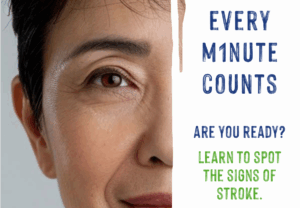
This year, World Stroke Day on October 29 is a pivotal moment for global awareness, coming just weeks after the UN High-Level Meeting on NCDs. The World Stroke Organization is rallying the world around the theme “Every Minute Counts,” with a sharp public-facing focus on the life-saving importance of knowing the signs of stroke and the urgent need to #ActFAST.
The theme is literal. When a stroke happens, the blood supply to part of the brain is cut off. Without blood, brain cells begin to die. Advanced treatments like clot-busting drugs (thrombolysis) and clot retrieval (thrombectomy) are incredibly effective, but they must be administered within a very narrow window of time. Every minute lost can mean the difference between a full recovery and permanent disability.
Your Mission: Become a Stroke Spotter
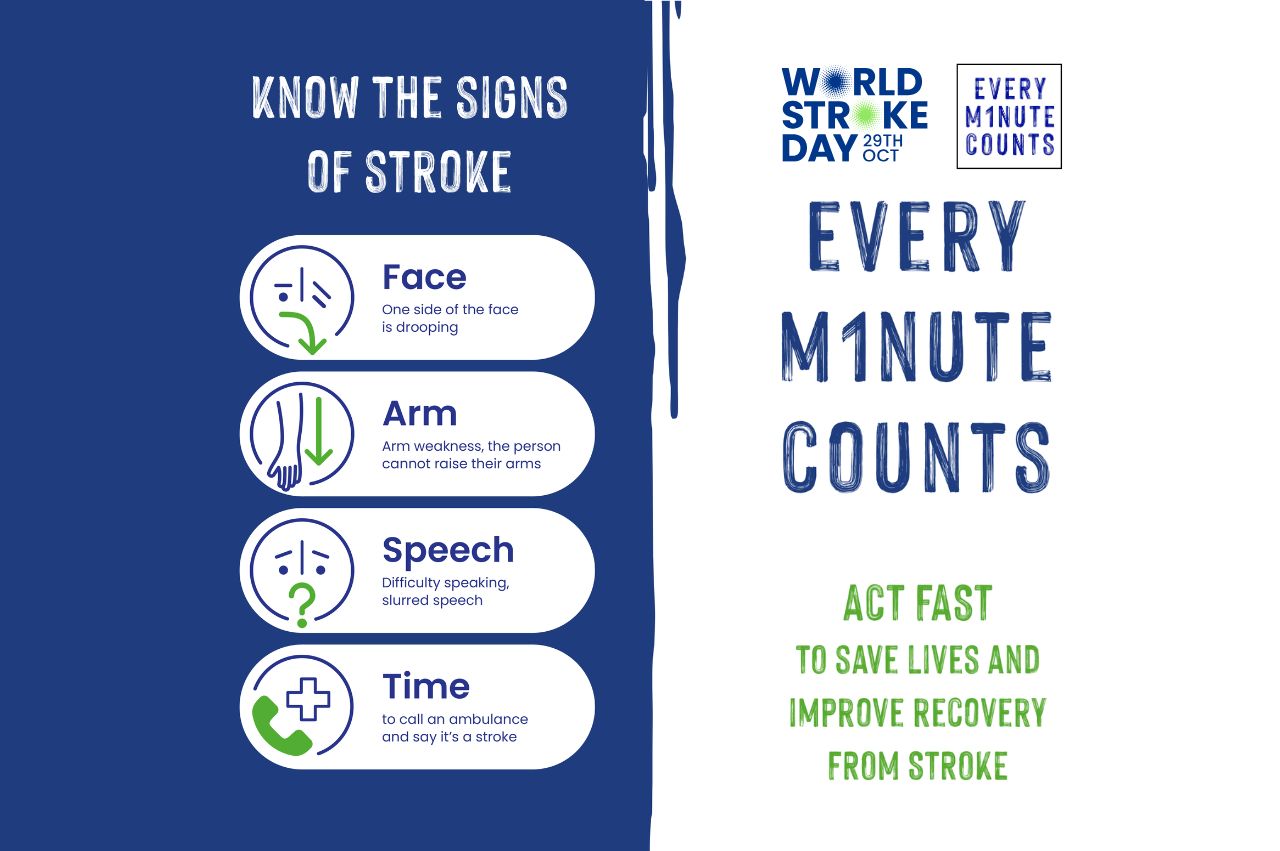
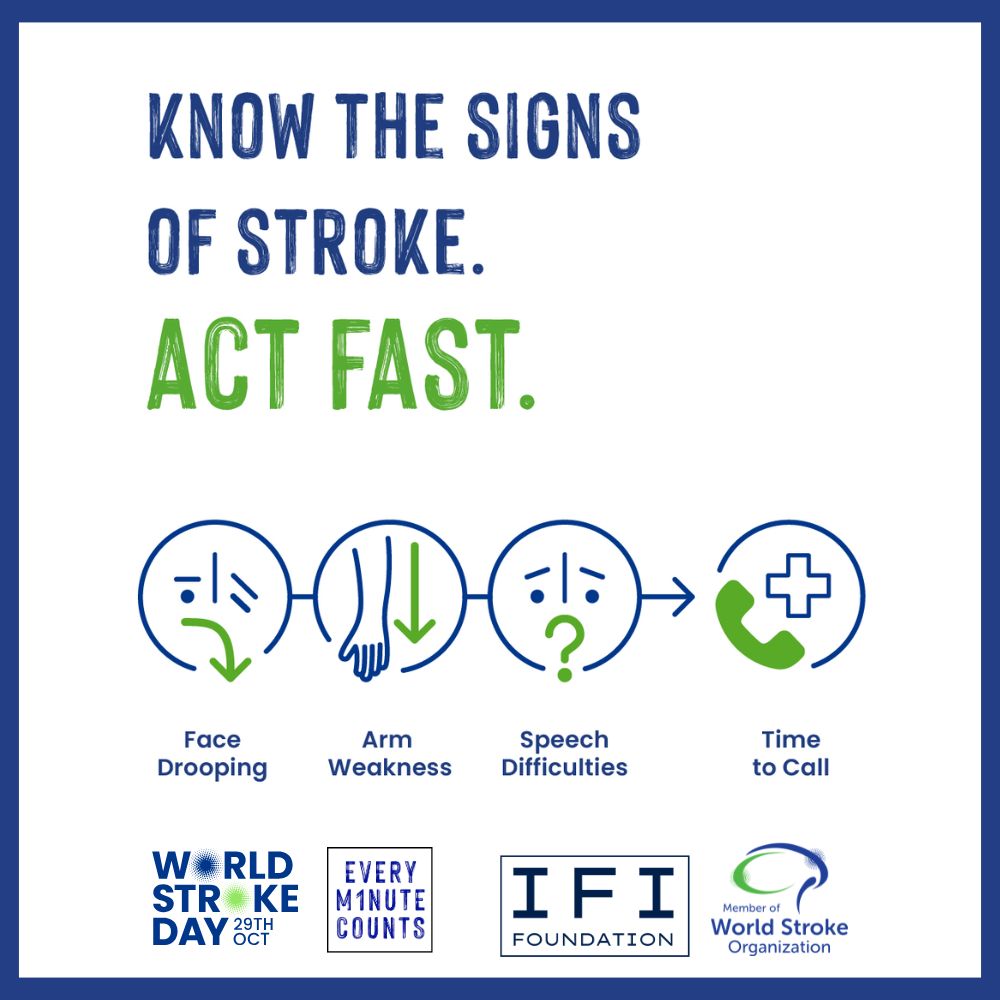
This is where public awareness becomes a medical intervention. The greatest barrier to treatment is not technology; it’s recognition. The stroke specialists urge everyone to learn the FAST test, an easy way to remember the most common signs of a stroke:
-
F – Face: Has the person’s face drooped on one side? Can they smile?
-
A – Arms: Can they raise both arms and keep them there? Does one arm drift downward?
-
S – Speech: Is their speech slurred? Are they unable to speak or hard to understand?
-
T – Time: It’s Time to call emergency services immediately.
Many experts also add BE-FAST, including B for Balance (sudden loss of balance or coordination) and E for Eyes (sudden vision loss in one or both eyes).
There is a critical need to empower our youth with this knowledge. Young people are often the first responders at home with their parents or grandparents. By teaching them the FAST signs, we transform them from bystanders into active “Stroke Spotters.”
Local Action, Global Impact
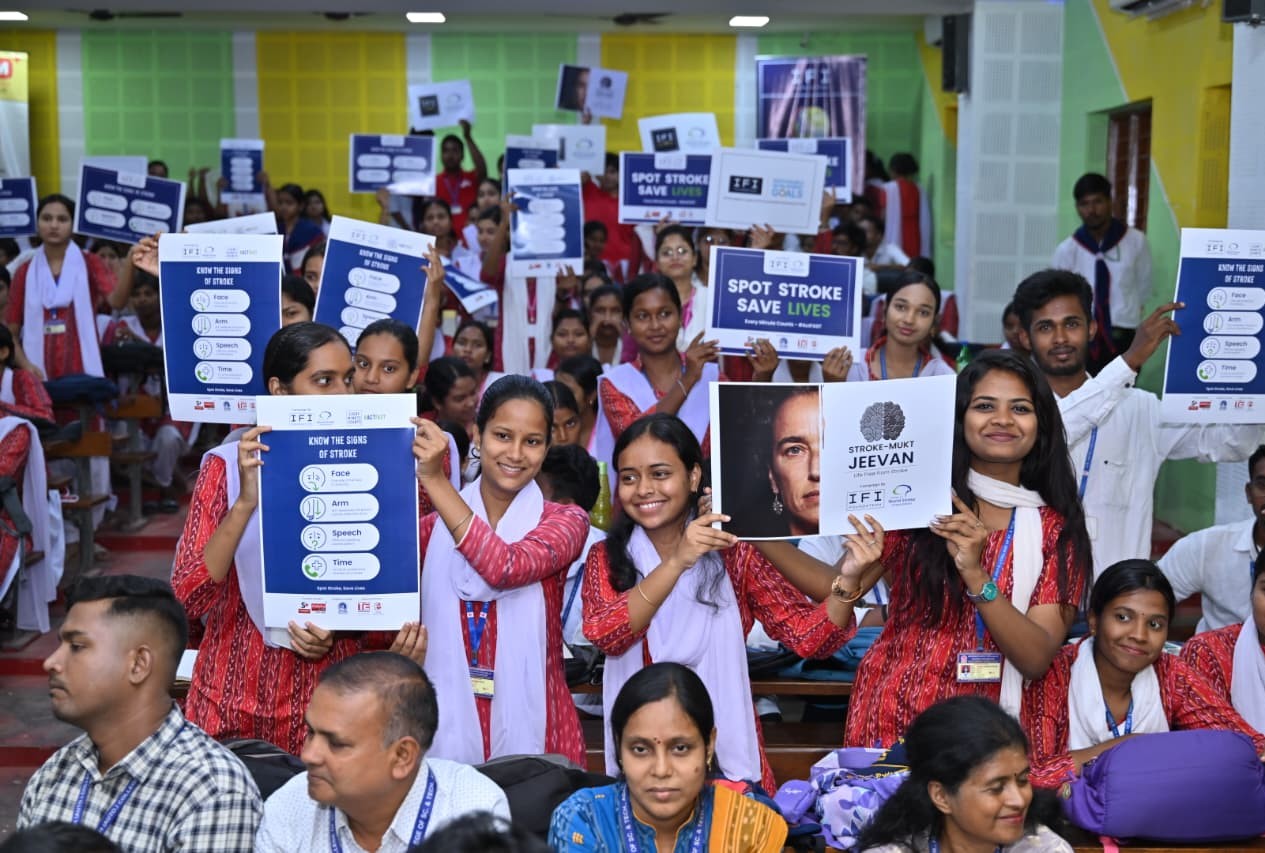
In India, this call to action is being championed by organizations like the IFI Foundation, a member of the World Stroke Organization. Since 2023, the foundation, in collaboration with partners like Swasthya Plus Network, OdishaLIVE, and others, has been hosting a comprehensive campaign on stroke awareness.
This initiative, titled ‘Stroke Mukt Jeevan’ (Life Free from Stroke), delivers informational videos, powerful social media messages, and stories of stroke survivors to educate the public. A key component of this effort is a special awareness program for university-level students under the theme “Spot Stroke, Save Lives“, directly empowering the next generation to be first responders in their communities.
We must drill these signs into our collective consciousness until acting FAST is a national reflex. On this World Stroke Day, the call to action is clear: Know your risk factors. Learn the signs. Be the one who acts.
#EveryMinuteCounts #StrokeMuktJeevan #ActFAST
(The author is the Co-Chair of IFI Foundation and the Founder & CEO of OdishaLIVE. A senior journalist, he has a deep interest in public health communication, media, and entrepreneurship. He leads the IFI Foundation’s stroke awareness initiative as the Campaign Chair.)
Courtesy: OdishaPlus