14,000 Child Marriages Prevented, 13,500 Villages Declared Free — Can Odisha End the Practice by 2030?
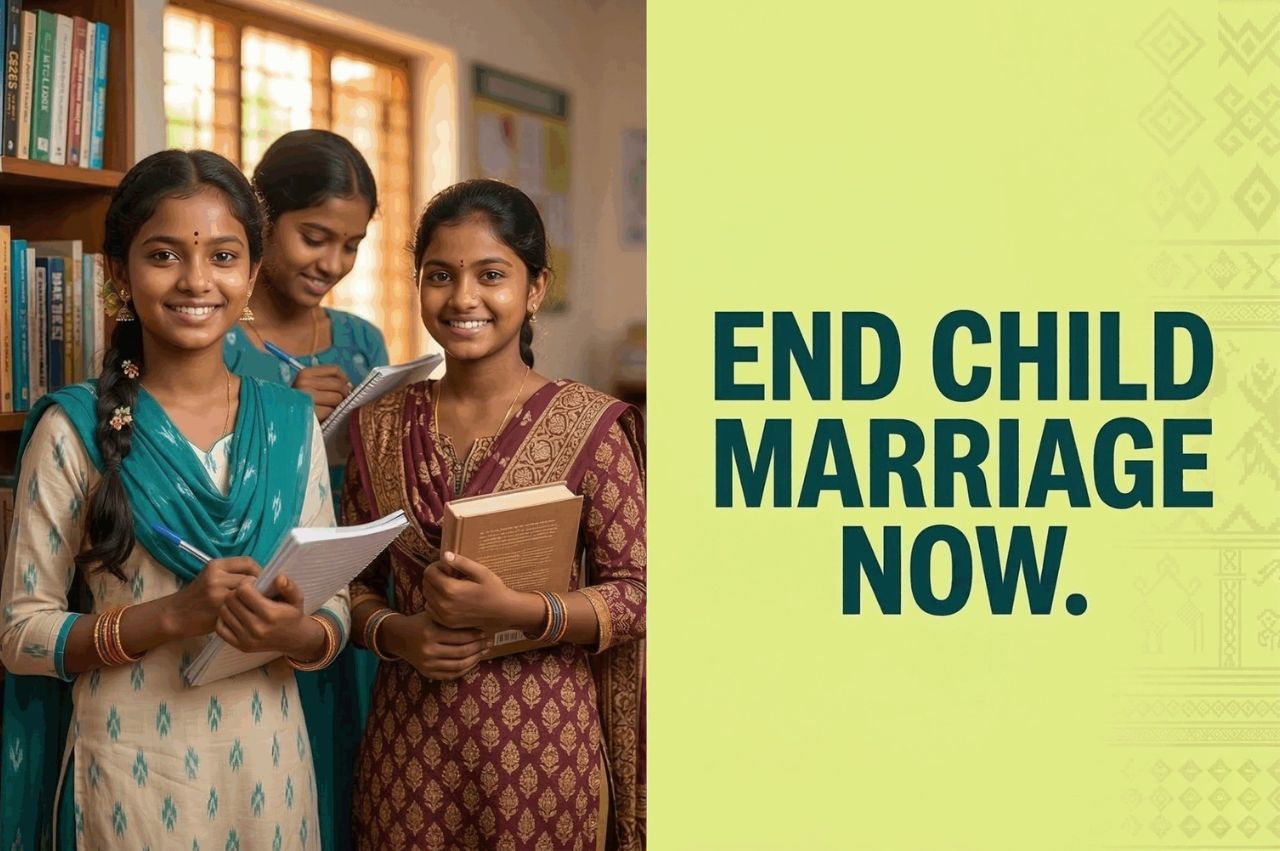
A new report by Odisha’s Women and Child Development Department maps the state’s ambitious, data-driven campaign to end child marriage — and the hard road that still lies ahead.
Nilambar Rath
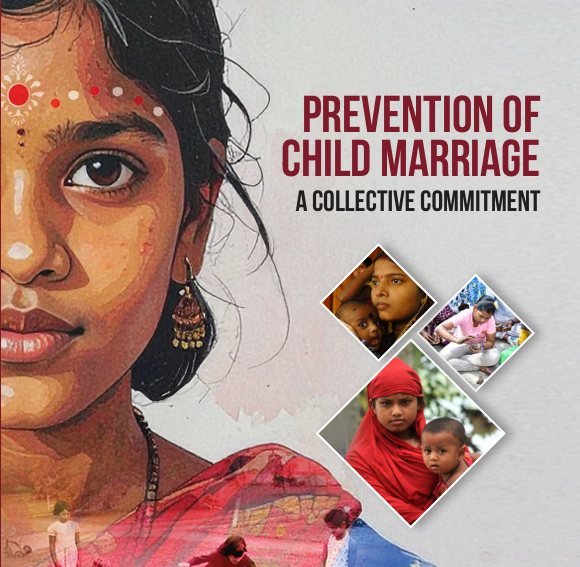
When Odisha’s Department of Women and Child Development released its publication ‘Prevention of Child Marriage – A Collective Commitment’ on the occasion of International Women’s Day 2026, it did more than showcase government programmes. It laid bare both the progress and the persistent fault lines in one of the state’s most sensitive social challenges — child marriage.
The 14-page report, is part policy document, part field manual, and part public appeal. It documents a decade-long institutional campaign that has prevented over 14,000 child marriages, declared more than 13,500 villages child marriage-free, and mobilised millions of adolescents through awareness and empowerment programmes. Yet it also acknowledges, with unusual candour for an official publication, that one in five young women in Odisha was still married before turning 18.
The Numbers That Frame the Challenge
The National Family Health Survey (NFHS-5) provides the statistical backdrop. According to the report, 20.5 per cent of women aged 20 to 24 in Odisha were married before the age of 18. While this figure is below the national average of 23.3 per cent, it still represents a staggering number of girls denied their adolescence.
The teenage pregnancy rate stands stalled at 7.6 per cent, secondary school dropout rates remain at 23.6 per cent — driven in significant measure by poverty, early marriage, and entrenched gender norms — and anaemia among women of reproductive age has worsened, rising from 51 per cent to 64.3 per cent. The child sex ratio, a barometer of deep-rooted gender bias, has declined from 932 to 894.
Chief Secretary Anu Garg contextualised the challenge in her message in the report. “According to NFHS-5, 20.5 per cent of women aged 20 to 24 years in Odisha were married before the age of 18, and the rate of teenage pregnancy stands at 7.6 per cent. These indicators have guided targeted, evidence-based interventions anchored through ADVIKA and the Odisha State Strategy and Action Plan to End Child Marriage,” she noted.
With a population exceeding 4.65 crore that includes 22.8 per cent Scheduled Tribes and 17.1 per cent Scheduled Castes, the problem is not evenly distributed. Tribal, rural, and marginalised communities bear the brunt, reinforcing intergenerational cycles of disadvantage that no single intervention can break.
Building the Legal and Institutional Architecture
Odisha’s response has been to construct a layered defence — legal, institutional, and community-driven — that the report documents in considerable detail.
At its foundation lies the national Prohibition of Child Marriage Act (PCMA), 2006, which defines a child as any girl under 18 and any boy under 21, criminalises child marriage, and empowers authorities to annul such unions. Odisha reinforced this with the Orissa Prohibition of Child Marriage Rule, 2019, creating an administrative framework that extends enforcement deep into the grassroots.
The report highlights several key features of this framework. The Director of ICDS and Social Welfare serves as the Chief Child Marriage Prohibition Officer (CCMPO), coordinating efforts statewide. District Collectors function as nodal officers with powers to review implementation and ensure inter-departmental convergence. During high-risk periods such as Akshaya Tritiya — traditionally considered auspicious for marriages — the District Magistrate is deemed the Child Marriage Prohibition Officer with full statutory powers.
Perhaps the most significant structural intervention has been the scale of enforcement deployment. The state has designated more than 10,000 Child Marriage Prohibition Officers (CMPOs) and over 63,000 Child Marriage Information Officers (CMIOs). Child Development Project Officers, Panchayat Executive Officers, and wardens of residential hostels under the ST & SC Development Department and School & Mass Education Department have all been brought into the CMPO net — a cross-departmental approach designed to reach the last mile in tribal and marginalised communities.
Source: Department of Women and Child Development, Government of Odisha
The State Strategy 2024–2029: From Awareness to Systemic Change
The report details the revised State Strategy and Action Plan to End Child Marriage (SSAP) 2024–2029, which marks a deliberate shift from awareness-raising to what it calls “deeper, systemic transformation.” Built on the original 2019 roadmap, the revised strategy adopts a rights-based and gender-transformative framework.
The SSAP’s architecture rests on multi-tiered task forces at the district, block, and Gram Panchayat levels, responsible for coordinating inter-departmental efforts and monitoring child marriage cases. The strategic interventions outlined in the report span three broad pillars.
The first focuses on strengthening the legal and policy framework — evaluating existing policies, defining stakeholder roles, and mapping children vulnerable to child marriage, particularly school dropouts and children of migrant worker families.
The second pillar emphasises creating an enabling environment by promoting partnerships with elected representatives, popularising reporting mechanisms such as the 181 Women Helpline and 1098 Childline, and providing comprehensive care and counselling to married girls and teenage mothers.
The third and arguably most transformative pillar centres on empowering adolescents through multi-sectoral approaches, life skills education, and gender-transformative programming.
ADVIKA: The Programme That Reaches Millions
No account of Odisha’s child marriage prevention efforts is complete without examining ADVIKA, the state-wide adolescent empowerment initiative that has become the centrepiece of the campaign.
Launched in 2020 in partnership with UNICEF and expanded significantly in 2023, ADVIKA — meaning “I am unique” — targets adolescent girls and boys aged 10 to 19 through education, life skills, leadership, and awareness sessions.
The scale of ADVIKA’s reach is striking. According to the report, the programme has engaged more than 2.5 million adolescents through practical sessions on leadership, education, and life skills. It has contributed to the declaration of over 11,000 villages as child marriage-free and has helped prevent hundreds of child marriages each year. The scheme serves as a unified platform linking various government programmes targeted at adolescents, ensuring they receive comprehensive support both in and out of school.
ADVIKA’s impact is most visible in the vulnerable pockets — the tribal belts of Koraput and Nabarangpur, the remote villages of Kandhamal and Rayagada — where traditional norms around early marriage are strongest. By creating peer leaders, conducting village-level sessions, and linking adolescents with education and health services, the programme has begun to shift the conversation from enforcement alone to empowerment.
Commissioner-cum-Secretary, Department of Women and Child Development, Government of Odisha, Dr Mrinalini Darswal pointed to the measurable outcomes. “The data demonstrates measurable impact. Between 2019 and 2024, more than 14,000 child marriages were prevented. Over 13,500 villages and 954 Gram Panchayats have declared themselves child marriage-free,” she stated in her message.
She added that from 2019 to early 2025, authorities registered 8,159 cases, with higher reporting in districts such as Nabarangpur, which recorded 1,347 cases. “Increased case registration often reflects improved reporting mechanisms and proactive intervention rather than a rise in incidence,” she clarified — a distinction that is important to note for any honest reading of the data.
On the Ground: Campaigns, Rescues, and Folk Theatre
The report’s account of recent field interventions illustrates how policy translates — or struggles to translate — into action. During the Akshaya Tritiya week of April 2025, the department led a coordinated campaign across all 30 districts, organising over 12,000 awareness activities that reached more than 2.5 lakh individuals. High-risk locations including temples, mass gatherings, and tribal belts were placed under surveillance, and field-level staff conducted thousands of home visits to identify at-risk children and counsel families.
The report documents specific rescue operations — a 12-year-old girl traced and rescued in Lanjigarh block after eloping with an adult male, a child marriage between a 14-year-old and a 20-year-old prevented in Khordha through timely intelligence from the ICDS network. These are not just case studies; they reflect the operational strength of a system where Anganwadi workers, ADVIKA peer leaders, Panchayati Raj members, and Child Welfare Committees function as an interconnected early-warning network.
One of the more innovative elements documented is the use of folk shows — traditional art forms such as Dasakathia, Pala, and Bharata Lila — performed in local dialects across village spaces to challenge social norms around early marriage. The report notes that these performances, far from being mere entertainment, served as catalysts for community dialogue, often followed by pledge-taking against child marriage and immediate identification of at-risk adolescents by frontline workers.
The District Picture: Progress Uneven
The district-wise data published in the report reveals the unevenness of progress. Ganjam and Gajapati have been declared fully child marriage-free districts, with all their villages — 3,309 and 1,510 respectively — earning the declaration. Kandhamal, Rayagada, and Nabarangpur have made significant strides with more than a thousand villages each achieving the status. But districts like Sundargarh (18 villages out of 1,779), Puri (29 out of 1,722), and Keonjhar (43 out of 2,132) have a long way to go.
The year-wise data on cases received and prevented also tells a nuanced story. In 2022, all 2,116 reported cases across the state were successfully prevented. In 2023, the figure was 1,624 — again, all prevented. But in 2024, of 1,537 cases received, 1,392 were prevented — a success rate of about 90 per cent but a reminder that gaps remain. Nabarangpur alone accounted for 417 of those cases, underscoring the concentrated nature of the challenge.
Beyond the Numbers: What Remains Undone
Dr Darswal’s message in the report offers a sober assessment. “These figures represent more than statistics. They signify more girls remaining in school, enjoying better health outcomes, and building secure and dignified futures,” she wrote.
Yet the report itself acknowledges that the decline in child marriage prevalence — from 21.3 per cent in NFHS-4 to 20.5 per cent in NFHS-5 — is modest. As Director Monisha Banerjee observed in her message, while the progress is encouraging, the department remains committed to “accelerating the pace of change.”
The structural drivers — poverty, migration, gender norms, gaps in secondary education — are not amenable to quick fixes. The report’s own data on rising anaemia rates and a declining child sex ratio suggest that the ecosystem of gender disadvantage is far from dismantled. What Odisha has built, however, is a system — legal, institutional, and community-rooted — that can respond, intervene, and over time, prevent.
Chief Secretary Garg’s message in the report placed this in a governance context. “This booklet presents Odisha’s integrated approach by documenting key policies, institutional mechanisms, field-level practices and community-led initiatives that together constitute a comprehensive prevention ecosystem. The Government of Odisha remains firmly committed to ensuring that every child grows up safe, educated and empowered,” she stated.
The Road to 2030
The state has set itself the target of becoming child marriage-free by 2030. Whether that ambitious goal is achievable will depend on whether the momentum documented in this report can be sustained and deepened — particularly in the districts and communities where the challenge remains most acute.
As Deputy Chief Minister Pravati Parida observed in her closing appeal in the report, “Ending child marriage is not only about protecting children from harm, but also about upholding their right to dream, to learn, to play, and to grow into confident and empowered citizens. Together, we can and must ensure that no child is forced into marriage, and that every girl and boy in Odisha has the opportunity to build a brighter and more dignified future.”
The question Odisha must answer in the years ahead is not whether it has the frameworks — it clearly does. It is whether these frameworks can reach every village, every family, and every girl at risk, before it is too late.
#ChildMarriage #EarlyMarriage #ChildMarriagePrevention
(About the Author: Nilambar Rath is a senior journalist, communication specialist, and development communication expert based in Bhubaneswar, Odisha. He is the Founder Editor & CEO of OdishaLIVE, one of the state’s pioneering digital media platforms. With over three decades of experience spanning journalism, media strategy, and public communication, Nilambar has been closely associated with various social impact initiatives aimed at advancing education, culture, heritage preservation, and grassroots development across Odisha.As Co-Founder & Mentor of the IFI Foundation, Nilambar Rath helps accelerate youth action for the SDGs and leads research & action to advance its mission of social outreach and public health awareness through SBCC. He writes on policy, governance, and social development for www.odisha.plus.)
Courtesy:OdishaPlus